It explains before it fixes.
Every report is looked into first: a fault in the code, a setting, or works as intended. Error codes are told in words too: a play-403 says what Google Play refused, and what to do.

 Controxity · AI that fixes your apps
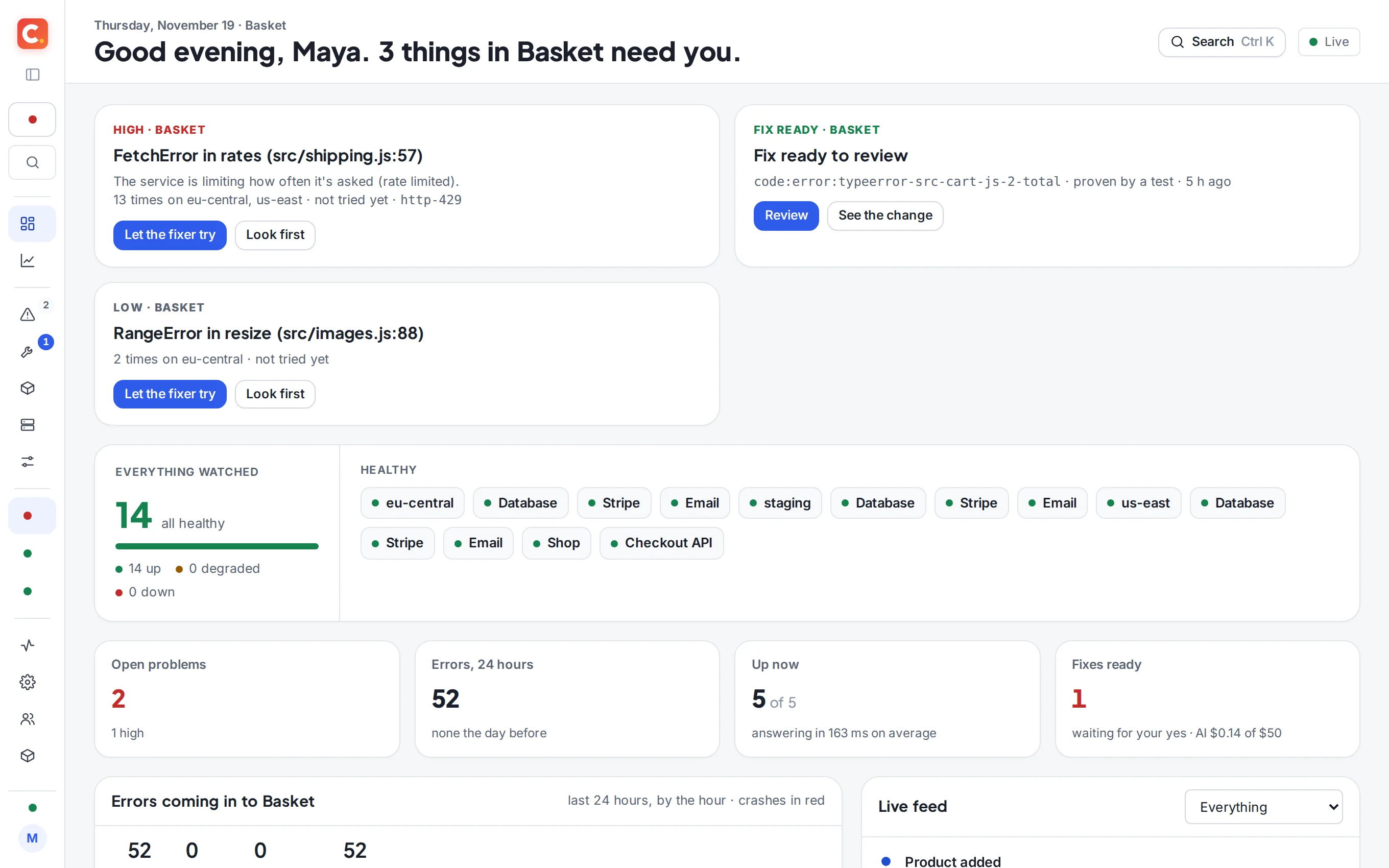
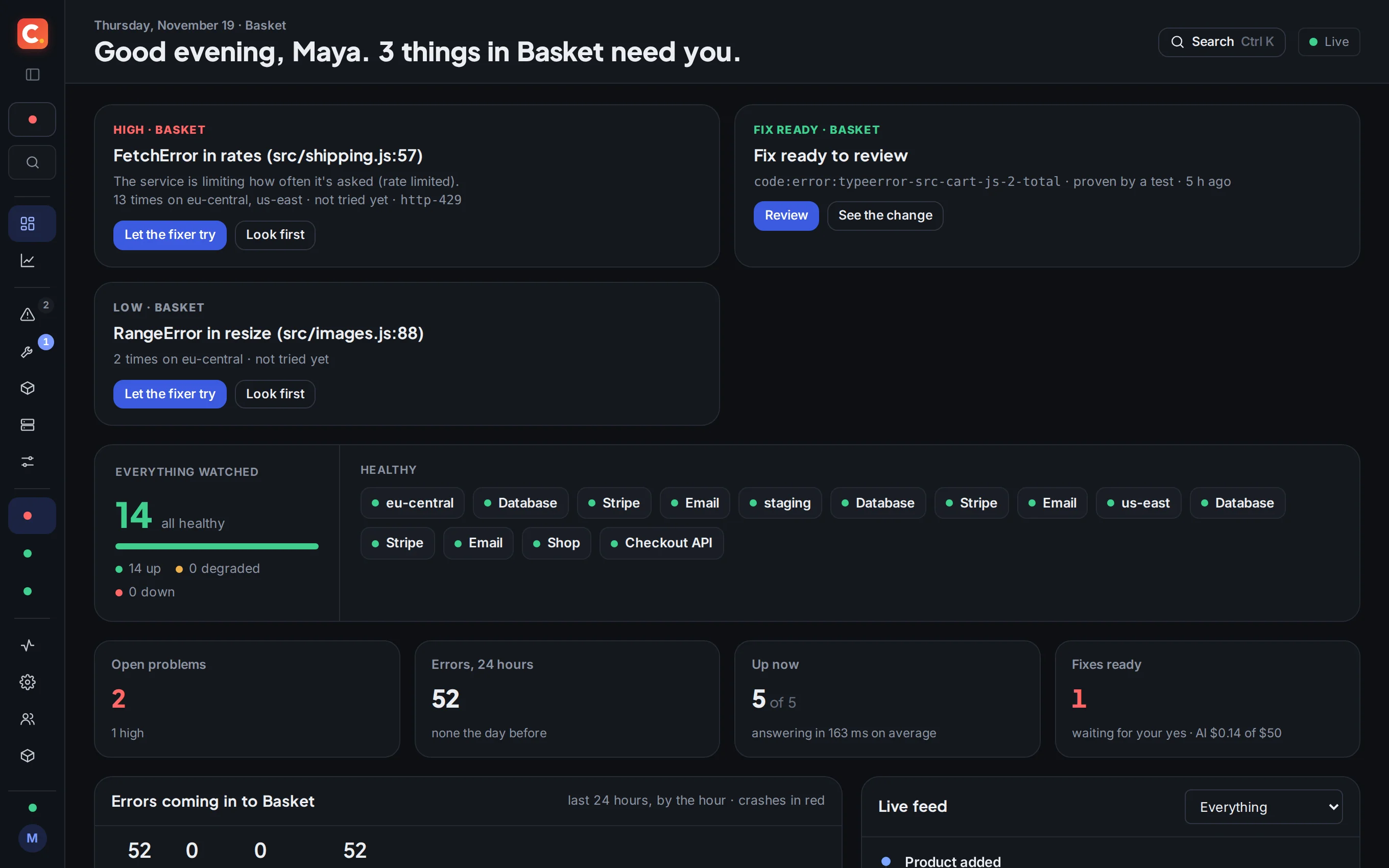
Controxity watches your apps and the services they depend on, explains what goes wrong in plain words, and has AI fix it in a copy of your code, proven by your own tests. Nothing reaches your users until your team says yes.
Works with what you build, and the AI you choose
Four steps, and a person at the last one. Every step leaves a record: what was seen, what changed, which tests proved it, and who said yes.
A few lines in your app, in about five minutes. It sends what went wrong and where, never your users' data.
// as early as you can
const controxity = require("controxity");
controxity.init({ key, url });
controxity.express(app);  // or fastify, nest
Errors, crashes, failing health checks and the problems people report, merged and explained: where it happened, how often, and on which version.
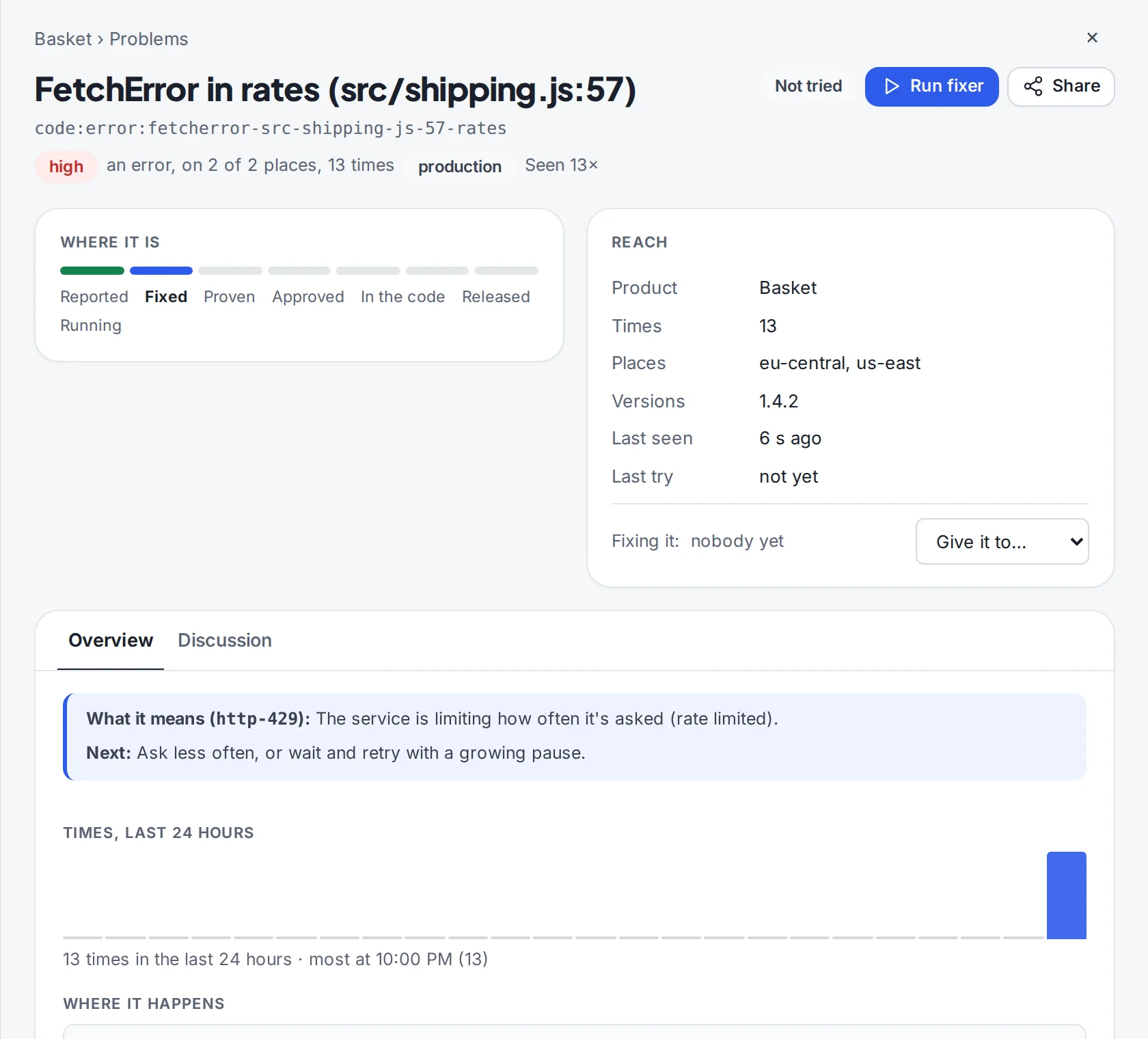
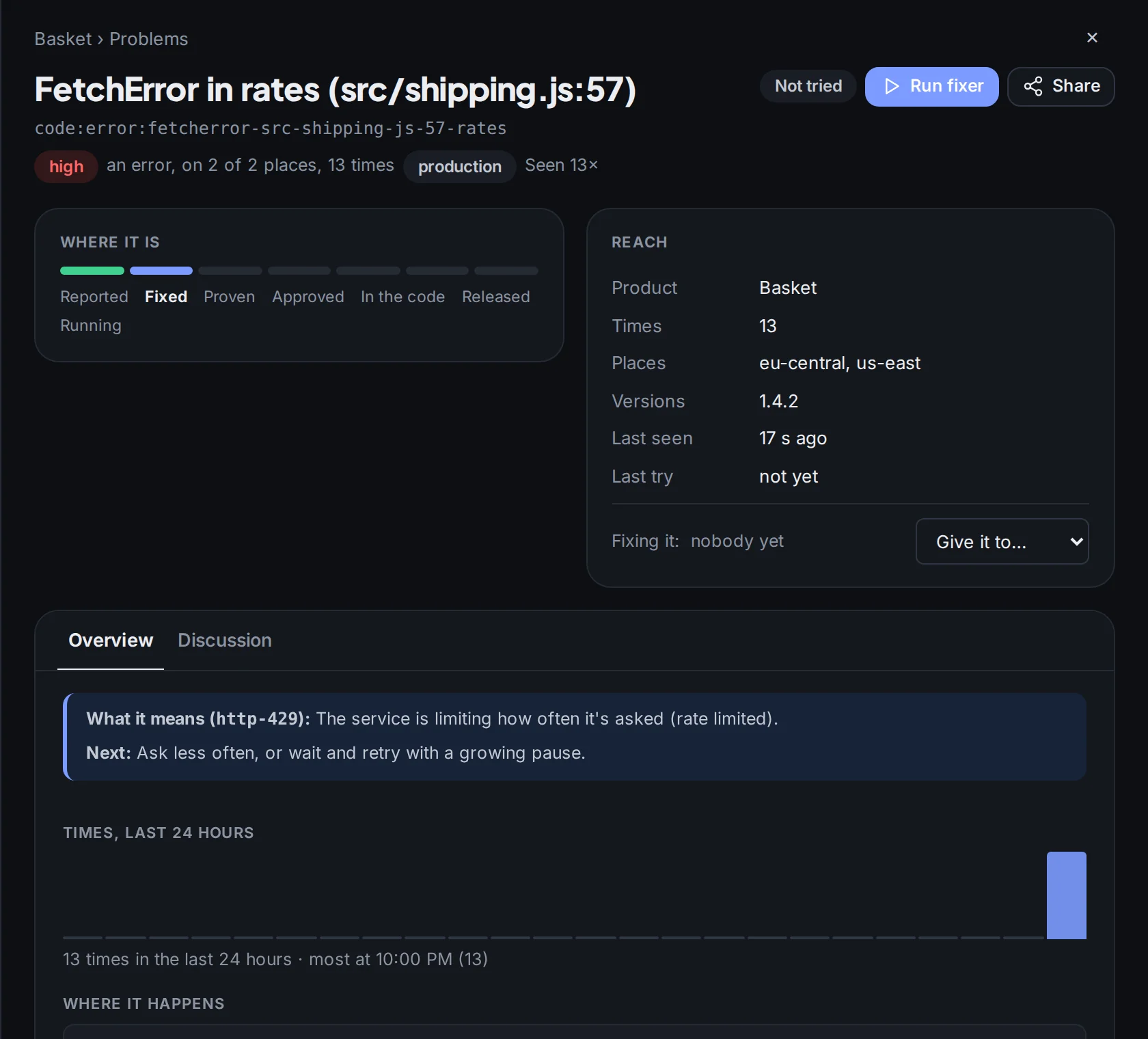
The AI works in a throwaway copy of your code. Your tests run before and after, and it only counts as fixed when a test that failed now passes.
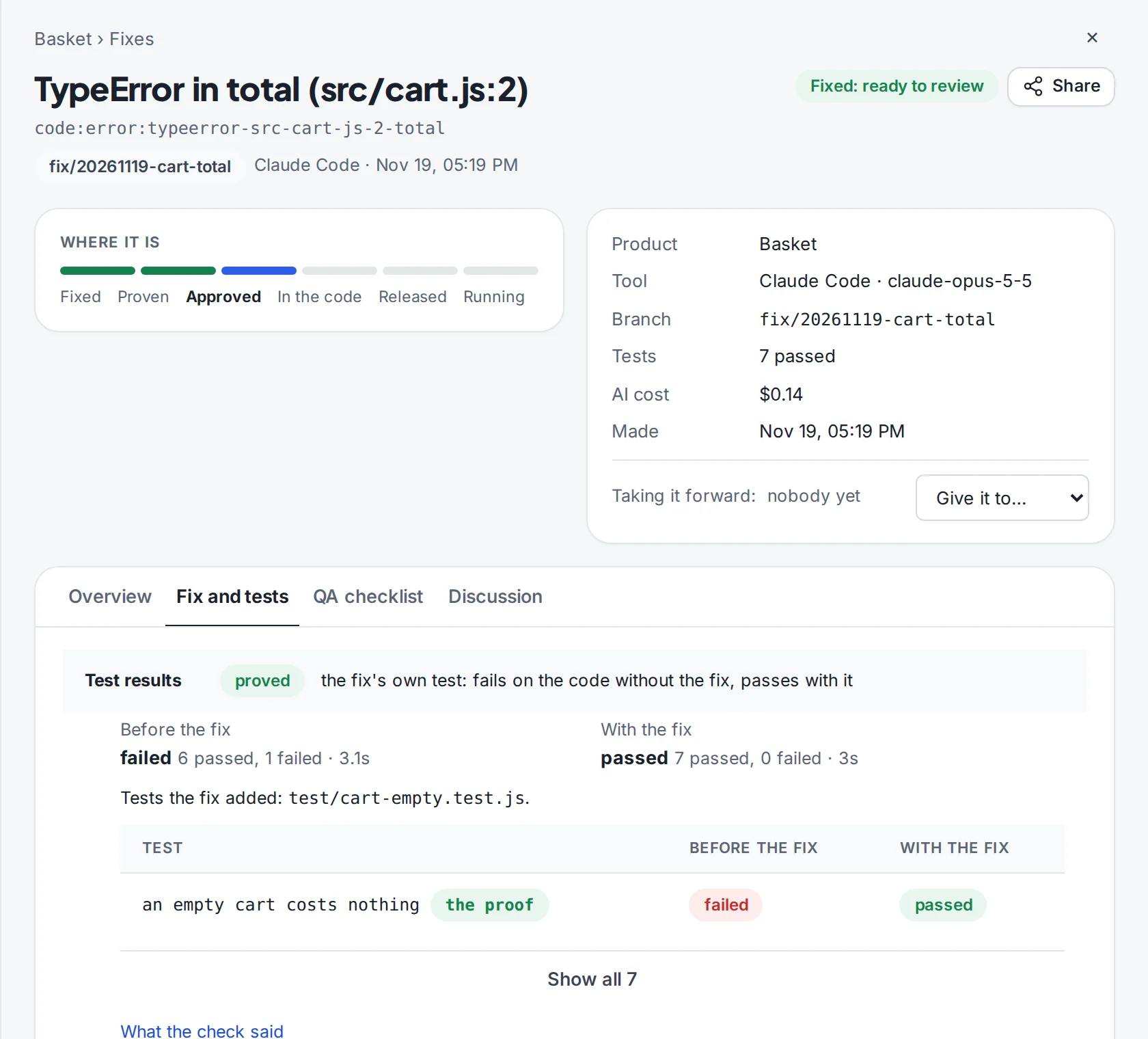
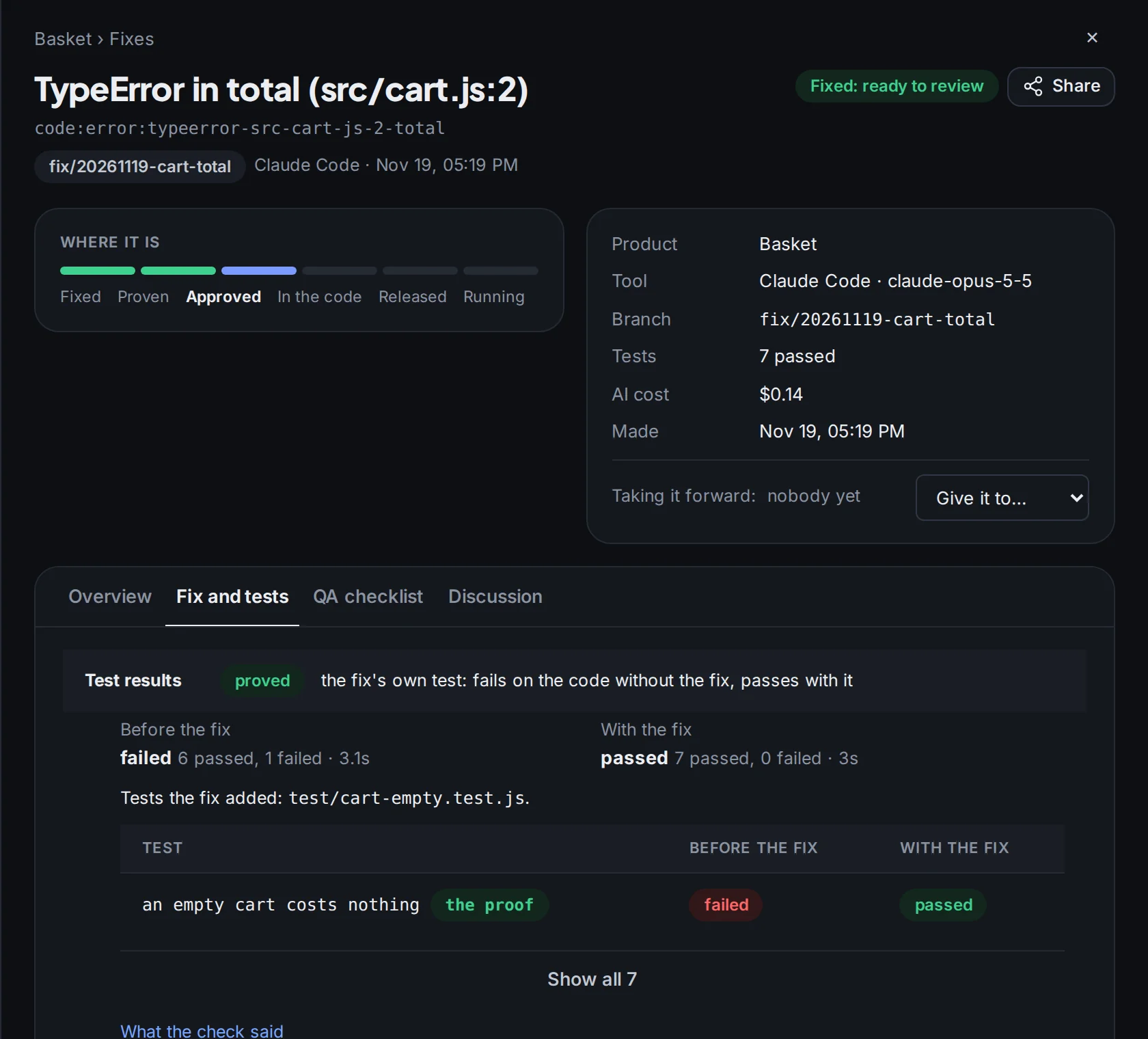
Staging first, then your own steps: QA tries it, a lead says yes, an admin if you want. Each place reports its version, so you see the fix arrive: fixed means running.
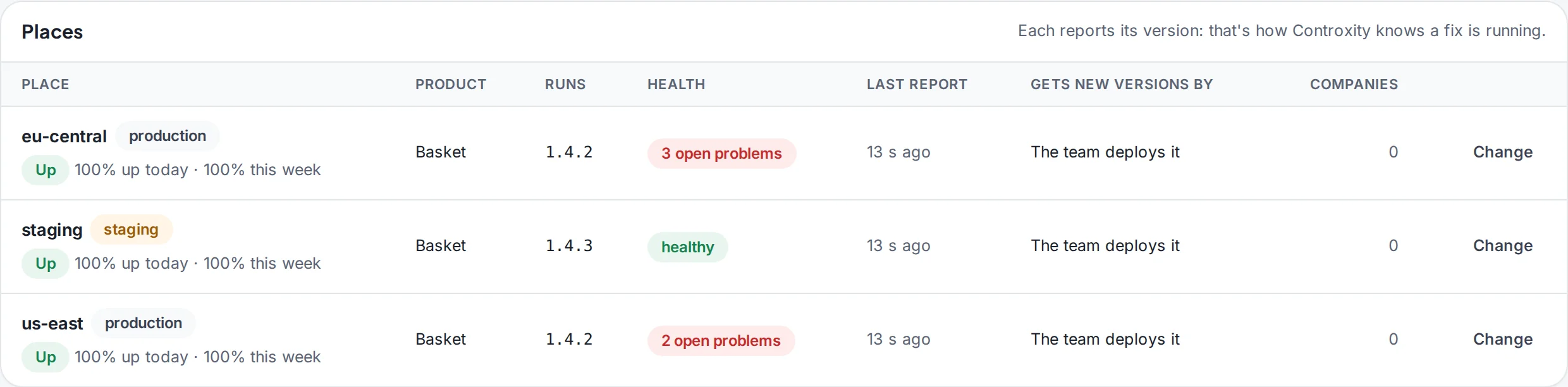
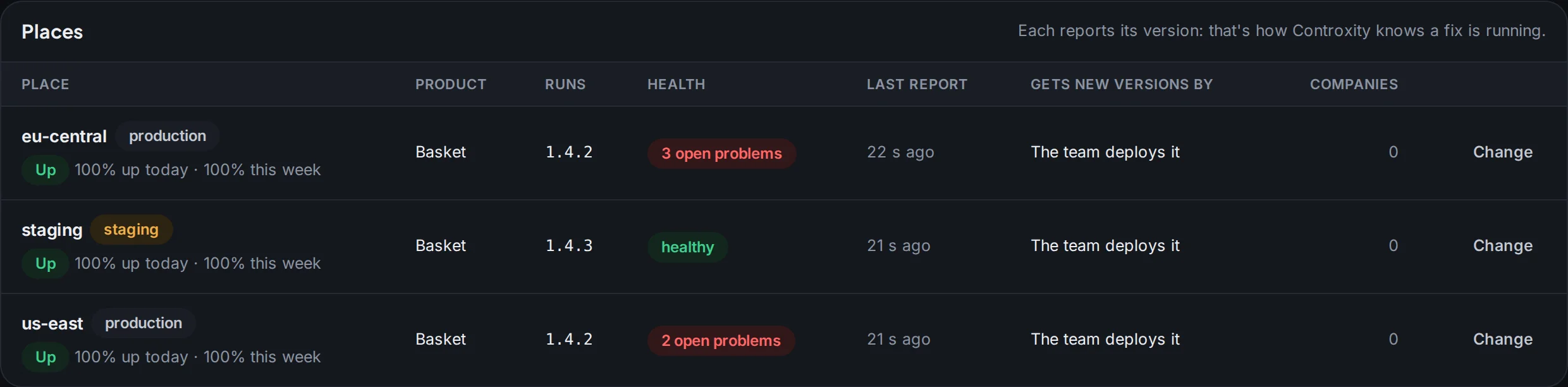
Built for one app or hundreds: each with its own parts, owners, places it runs, settings and limits.
Every report is looked into first: a fault in the code, a setting, or works as intended. Error codes are told in words too: a play-403 says what Google Play refused, and what to do.
A change no test proves says so: “changed, not proven”. A fix that deletes or switches off tests is never called a fix.
Every place your app runs, every uptime check and every health check in one bar. Across products, one marker each; the detail is a click away.
Your app says what it depends on (the database, payments, Google Play) and whether it works. Controxity also visits your addresses every minute from outside.
A fix is running when a place reports its version, or a commit after it. If the problem comes back on a version with the fix, it opens again by itself.
Your own deploy command, a hosting hook, or a helper on your server. A new version with more crashes than the one before is plain to see.
Send your source maps when you deploy, and every error points to your own file and line. The maps stay with Controxity, never served.
Phone crashes go through your server, with no key in the app. Google Play's crashes and freezes are fetched for you. Cloudflare Workers and Deno too.
QA on staging, one or two leads, an admin. Each app sets its own, and each person hears by email when it's their turn.
The team, QA's notes and the AI in one place. Ask why it changed a file, or have it try again with a note.
Admin, Lead, QA, Developer, Viewer, for the whole company or one app. Sign in with your company's accounts by OpenID Connect or SAML.
Every fix, yes, no and change of setting is recorded by name, and exports for your auditors.
Rules the system enforces, not promises in a prompt.
Installs and tests run in a container of their own, network off for the tests, deleted after. The AI gets its own box too, with a copy of the code and nothing else.
Login, payments, secrets, migrations and how you ship stay protected, and so do the files you name, with your reason. Or a change there waits for a person to review it.
A monthly AI limit per app and per company, and a cap on every single run. At the limit, nothing starts.
Apps send an error's type, where it happened, and the steps and input shape around it, as codes, never values. Keys are kept sealed, and each fix gets only the one it needs.
Each company chooses. Controxity's AI is included up to a monthly limit. Or add your own key and pay your provider directly: Claude Code with an Anthropic key, or OpenCode with the model you prefer.
The same Controxity either way: one system admin, companies each with their own admin, people and apps, and nothing of one company visible to another.
Invoxity Inc.Reports, monitoring and releases are unlimited on every plan. A fix counts only when its change is merged: a try that fails, or one nobody takes, costs nothing.
No monthly fee: 3 fixes free each month, then pay for each fix once you add a card.
One developer.
Small teams.
Companies with rules to follow.
Your limits, your contract, on our servers or yours: everything in Business, single sign-on, a licence for self-hosting, and a person to call.
Prices in US dollars, before tax. Each plan includes Controxity's AI for its fixes; with your own Anthropic or OpenRouter key you pay your provider directly. Every paid plan starts with a 14-day trial, and the monthly cap stops extra fixes before a surprise bill.
Anything else: [email protected].
No. A fix lives on a branch in Controxity's own copy of your code. It reaches staging and production only through the steps your team set, or stays a change you download and apply yourself. Automatic mode goes only as far as you allow.
Into a throwaway container for each fix, with the network off while your tests run. Self-hosted, it never leaves your servers. The AI sees a copy of the code it's fixing and nothing else of yours.
Then the tests say so. A change that nothing proves is marked “changed, not proven”, a change that breaks a test isn't offered, and every fix waits for a person. QA can send it back with a note, and the fixer tries again with it.
Node.js (Express, Fastify, NestJS), Python (Django, Flask, FastAPI) and web pages through the SDKs; phone apps through your own server; Cloudflare Workers, Deno and anything else through its API. Store builds are made by a runner on your own machine. The docs have a guide for each.
Yes, with checks: commands a fix must pass, like a build, a type check or a linter. A fix that passes them is shown as “checks pass, not proven”, never as fixed, until there is a test to prove it.
Not to follow what's happening. Problems and fixes are explained in plain words, and approvals are one press. Setting it up in an app is a developer's five minutes.
Connect one app, let it find what's wrong, and approve the first fix yourself.